
They Won’t Remember Anyway: The Dementia Myth That Can Change Everything
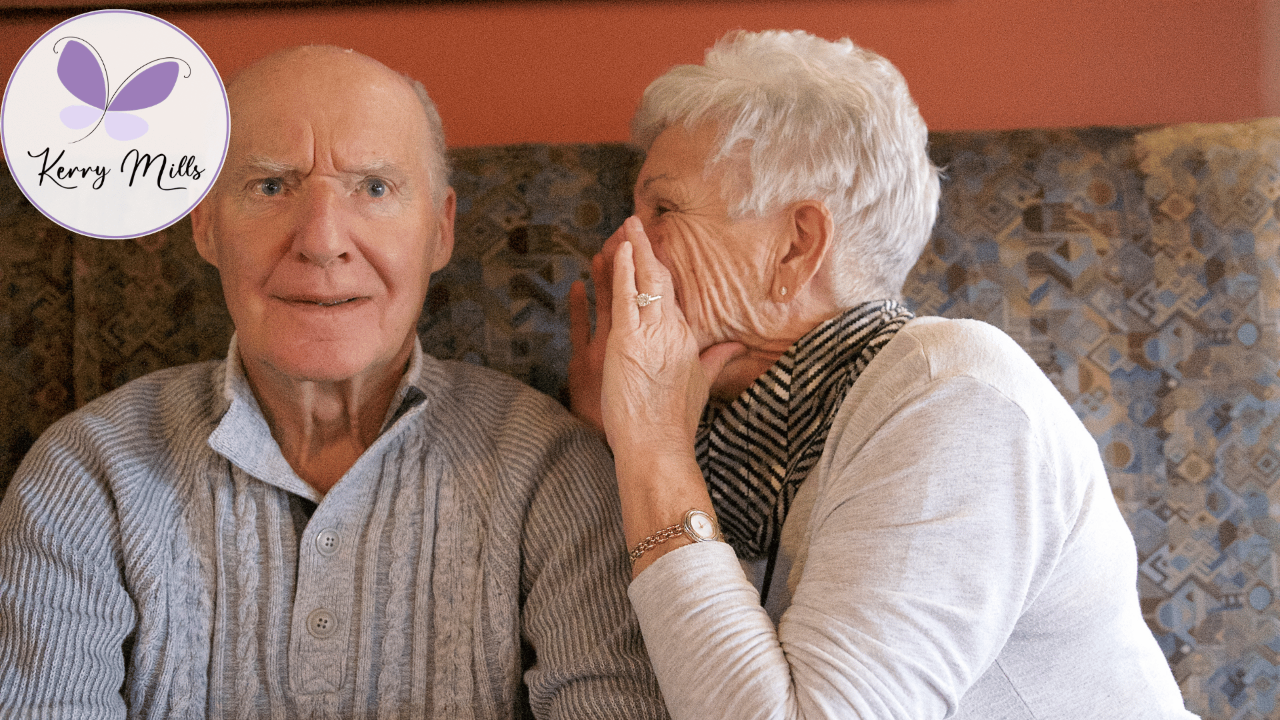
If you had one of the most magical moments of your life today, but you knew you wouldn’t remember it tomorrow, would you still want to have the moment?
I would.
Maybe you would, too.
And that question gets to the heart of one of the most damaging misunderstandings I see in dementia care:
“They won’t remember anyway.”
At first, that may sound like a simple observation about memory loss.
But the belief underneath it can become much bigger:
If they won’t remember, then maybe it doesn’t really matter.
❓Maybe it doesn’t matter how I act.
❓Maybe it doesn’t matter if or how I correct him.
❓Maybe it doesn’t matter if I talk about her right in front of her.
❓Maybe it doesn’t matter if I get impatient, speak sternly or raise my voice.
❓Maybe it doesn’t matter how much effort I put into keeping her engaged.
That is where this myth can become dangerous.
Because forgetting the details of an experience is not the same thing as being unaffected by the experience.
And when you understand that, you begin to see new ways to not only stay connected with the person you love, but also how much influence you still have over how your days go.
That is what I want to show you in this article:
👉Why it is so easy to believe that forgetting means your efforts don’t matter,
👉how that belief can slowly create more disconnection,
👉and what you can begin doing differently today.
Because your loved one may forget the moment.
But that doesn’t mean the moment had no impact.
They may not remember exactly what you said, why they are upset or what the argument was about. But they can still experience your presence, your tone, your attention, your frustration, your anger, your kindness, your dismissal, your respect, or your lack of it.
Those experiences can contribute to, or help explain, responses families don't always connect back to what happened earlier.
And what they experience can affect what happens next.
🤨A suspicious wife.
😤An angry or aggressive husband.
😔A father with dementia who withdraws and stops participating.
So no, this is not simply a feel-good, touchy feeling message about making precious memories together.
This is about understanding how memory actually affects the way you care for someone.
If I believe nothing is being remembered, I may begin acting as though nothing I do has consequences.
And that can make dementia harder for everyone involved.
Let’s talk about why.
Why This Myth Is So Easy to Believe
The obvious part of dementia is the forgetting.
❓Your husband asks the same question again.
☎️Your mother doesn’t remember that you called yesterday.
🍽️Your dad can’t tell you what he had for lunch.
🗣️Your wife forgets the conversation you had ten minutes ago.
That is obvious, you and everyone can see this.
So forgetting starts to look like all of memory.
And that makes sense.
If I asked your mother what she had for lunch and she couldn’t tell me, it would be very easy to think:
“She doesn’t remember.”
And in that particular way, she may not.
The problem is when we take that one type of memory loss and turn it into:
“She remembers nothing.”
Because that is not the same thing.
What people often don’t know to look for is the remembering that shows up somewhere else.
It may show up in behavior.
🥺Mood or body language.
🥺Willingness to cooperate.
🥺Comfort around a certain person. Anxiety around another.
🥺Their general disposition for the next several hours.
This is so easy to miss because most families have not been taught to look for it.
We tend to test memory by asking questions:
❓“What did you eat?”
❓ “Who came to see you?”
❓ “Where did we go?”
❓ “What did I just tell you?”
❓Or the all forbidden phrase, “Do you remember?” (thankfully, I think most of you have deleted this phrase from your mind…or will now. 😊)
When the person cannot answer, we conclude nothing stuck.
But what if we were looking in the wrong place?
Why “They Won’t Remember Anyway” Changes the Way We Treat People
Most human beings want to know that their effort is producing something of value.
That is normal. We like to see the fruit of our work so to speak.
🔬There are people who spend 30 years in a research lab pursuing a cure without knowing whether they will ever succeed.
📔There are missionaries who spend decades in a foreign land and never see a convert.
Those people ☝️are the exception.
They are not the rule.
Most of us need some sign that what we are doing matters.
Let’s apply this very “normal life aspiration” to dementia care.
🥱You are already tired.
💜You may already be doing more than you ever imagined you would need to do for your spouse or parent.
💪And now you are putting increasing effort into conversations, activities, meals, outings, appointments, visits, reminders, and routines.
But the person doesn’t remember.
❓Why go to all the trouble to engage Mom when she won’t remember what you did together?
❓Why spend 20 minutes patiently explaining something to your husband if ten minutes later he asks again?
❓Why bother taking Dad somewhere enjoyable if he cannot tell you about it an hour later?
❓Why keep trying to include your wife in decisions if she can’t follow the conversation?
❓Why remain patient, or talk calmly when your husband is raising his voice at you?
❓Why answer mom’s question on repeat as though she just asked for the first time when it is the 9th…in 9 minutes?
❓Why make the effort? (Besides the fact that you want to live with yourself, but that is a write up for another day.)
It can begin to feel futile.
A waste of time.
And most people feel guilty saying it, so I will say it: thankless.
It isn’t because you don’t care.
In fact, I believe most caregivers are already giving everything they have.
But you want to see some outcome that makes sense.
When you don’t, something can begin to shift.
And this usually starts long before anyone says, “Why bother?”
What This Can Look Like Early On
A husband starts answering questions for his wife because it is faster.
A wife corrects her husband every time he gets something wrong.
A daughter talks about her mother’s problems while Mom is sitting right there.
A son becomes impatient when the same question comes up again.
You begin saying (or expressing) things like:
🗣️“I just told you that.”
🗣️ “You already asked me.”
🗣️ “No, that’s not what happened.”
🗣️ “You can’t do that anymore.”
Over time, the person with dementia may stop trying, or:
🥊They may become defensive.
😤Or suspicious.
😡Or angry.
😩Or resistant.
🤬Or have outbursts.
Then the family sees the behavior and says:
👉 “She argues about everything.”
👉 “He is so stubborn now.”
👉 “She doesn’t trust me anymore.”
👉 “He gets aggressive.”
But what happened before that?
That is a question I wish families were encouraged to ask much more often.
Because I have watched this pattern more times than I can count.
I have watched spouses openly discuss their loved one’s problems in front of them.
And I have watched the person with dementia react.
Their expression changes.
Their body stiffens.
They become defensive.
They disagree.
Then sometimes they are hushed or corrected.
I have watched wives start treating husbands like children by correcting them, controlling them or reprimanding them.
I have watched husbands disengage with their wives so they can “just get the job done.”
And later I hear:
“He gets angry with me.”
“He yells.”
“He grabs my arms.”
Or
“She doesn’t want to do anything anymore.”
“She thinks I am hiding something from her.”
“She is suspicious I am stepping out on her.”
That behavior did not necessarily appear out of nowhere.
The person may not remember the exact exchange.
But that doesn’t mean the exchange disappeared.
Winston Didn’t Remember the Instruction. But That Didn’t Mean Nothing Happened.
One couple I worked with, let’s call them Kim and Winston, had been married for more than 50 years.
Winston had dementia.
They invited me over for dinner so I could spend some time with them and observe what was happening between them.
After dinner, Kim brought out a plate of freshly baked cookies.
🍪Winston took one.
Kim then looked at him and told him, “that is enough”.
The plate of cookies stayed on the table.
🍪A short time later, Winston saw the cookies and took another.
Kim told him again that he had had enough.
This time she was a little firmer.
The plate stayed there.
🍪Winston took another.
Now Kim was getting angry.
At this point, I excused myself and took the plate of cookies with me to the other room, out of Winston’s sight.
Think about what was happening.
🍪Kim remembered every cookie Winston ate.
Winston did not.
He did not remember the instructions.
He saw a plate of cookies.
🍪He took a cookie.
And suddenly his wife was irritated with him.
While Kim knows he forgets, it feels like he ignored her three times.
From Winston’s perspective, he was sitting at his own table, eating cookies, with company at the table, while his wife became increasingly angry with him.
One of the concerns Kim and her children had was that Winston could become agitated and sometimes grab Kim’s arms.
If that much happened during one dinner while I was sitting there, what do you imagine happened day after day?
Winston may not have remembered: “Kim told me not to take another cookie.”
But that does not mean he experienced nothing.
He experienced being corrected.
He experienced her frustration.
He experienced being embarrassed.
And if that happens often enough, what might he begin to associate with his wife?
Winston didn’t need a better memory. The situation needed a different approach.
The Person May Forget What Happened and Still Carry the Experience
Here is the distinction I want families to understand.
A person with dementia may not have reliable factual memory of an interaction.
But that does not mean they have no memory.
They may still know, in their own way:
❓Who shows up for them or who listens.
❓Who rushes them or embarrasses them.
❓Who talks over them or makes them nervous.
❓Who helps them feel safe.
❓Who treats them with dignity and not like a child.
Think about your best friend.
Is that person your best friend because they have perfectly remembered every story you have told them?
Probably not.
They are your best friend because of the experience of the relationship.
👥They are consistent.
👥They pay attention.
👥They show up.
👥You feel a certain way around them.
Those things matter.
And we see evidence of this in dementia care all the time.
💈A staff member comes to work with a new hairstyle, and residents notice.
Think about what that means.
On some level, they knew what she looked like before.
✈️Someone goes away for a while and comes back, and the person with dementia lights up.
They may not be able to tell you when the person left or how long they were gone.
But something registered.
😟A person with dementia becomes anxious around one caregiver and relaxed around another.
Something is happening there.
These are not small, meaningless details.
They tell us that forgetting facts is not the same thing as experiencing nothing.
Now Look at Lew and His Grandson
Lew had a grandson who played guitar.
Talking together had become difficult.
They often sat in silence.
🎸So when his grandson came to visit, he started bringing his guitar.
He would play for a while.
Eventually he started playing a little longer and keeping the visits a little shorter.
📅Lew liked doing things on his own schedule.
You could call him stubborn.
And on many days, getting him to do something he didn’t want to do could be difficult.
🧓🏼🧒🏼But after his grandson visited and played guitar, Lew was often noticeably more willing to do things. He walked more. Talked nicer to his caregiver. Smiled more.
Here is what makes this so important:
By the time his grandson left the room, Lew often did not know he had been there.
His short-term memory was that short.
So if we only tested Lew by asking:
“Who visited you?”
We might conclude that the visit did nothing.
But look at the rest of his day.
Something remained.
🎶Maybe it was the music.
👦🏼Maybe it was his grandson’s presence.
🩵Maybe it was the feeling of being with someone who loved him.
Probably some combination.
He could not give us the facts of the visit.
But the positive experience affected him for hours.
That is what I want families to start seeing.
The Other Side of This Myth Can Also Be Apathy and Isolation
Now imagine what happens when we don’t understand this.
We stop putting in the effort because we think everything just disappears.
📺The person with dementia spends more time sitting in front of the television.
🗣️We stop bringing them into conversations.
😒We stop looking for meaningful things they can still participate in.
🫤We stop including them because it is easier.
Then the person with dementia becomes more isolated.
But they are not the only one.
The primary caregiver often becomes isolated, too.
Especially when the caregiver is a spouse.
📉The marriage starts shrinking.
📉The conversation shrinks.
📉The outside world shrinks.
💔The caregiver becomes lonely.
💔💔Then grief escalates.
😡Maybe resentment.
😔Maybe depression.
And because this happens slowly, day after day, the caregiver may not even recognize how far things have shifted.
It reminds me of the old frog-in-hot-water analogy.
If the change happens gradually enough, you adjust to it without seeing what is happening.
It can slowly disengage the person with dementia and the person caring for them.
One Nurse Changed Her Approach in One Night
Years ago, I worked with a wonderful night nurse in a local hospital.
During a training, we were talking about how the brain changes in dementia and why our approach matters so much.
She was genuinely surprised.
Then she said something remarkable (and a little scary):
“I thought it didn’t matter. I figured they won’t remember anyway.”
She had never realized how much her attitude, her tone of voice, her eye contact, and her presence affected her patients.
Learning how the brain worked changed everything for her.
Her patients might not remember every interaction.
But they still experienced every interaction.
That one insight changed how she approached her work.
Not because she learned a complicated new technique.
She understood something differently.
And because she thought differently, she acted differently.
She made changes that very night.
Her work became more rewarding.
Her patients became more responsive.
I have seen that kind of change over and over again.
🛑A spouse stops arguing.
🛑A daughter stops taking her mom’s reaction personally.
🛑A son stops feeling helpless because he cannot “fix” the dementia his dad has.
The situation itself may not change immediately.
But understanding changes how we respond.
And when we respond differently, you may have less agitation, your loved one may surprise you with a great response, you may have less regret at the end of the day or see something in your mom, dad or spouse that gives you more insight for the next encounter.
So What Can You Do Differently?
Think back over the last 24 to 48 hours.
Sometimes what needs to change isn’t the person with dementia. It’s something around them. In Winston’s case, removing the cookies removed the need for him to remember the instruction. A small change in the environment prevented an argument neither of them needed.
Was there an encounter you wish had gone differently?
❓An argument or outburst?
❓A refusal?
❓A moment when your loved one became angry or shut down?
❓A situation that seemed to come out of nowhere?
Now look at that moment again with what you know now.
🤔Was there an expectation they could no longer meet?
🤔Did you expect them to remember something they simply could not remember?
🤔Was there correction or displeased tone?
🤔An expression on your face, perhaps of impatience, anger or disinterest?
I know that can be a hard thing to examine.
But I am not asking you to do it so you can blame yourself.
I am asking because there may be something in that interaction you have the power to change.
And sometimes the smallest change produces a much bigger result.
😌fewer arguments that you were able to de-escalate
😌more confidence when something goes sideways
😌recognizing what triggered something instead of feeling blindsided
😌less regret at bedtime
😌more moments where Dad cooperates, Mom relaxes, or your spouse responds in a way that seemed more like him or her
😌💜And dare you dream …more ability to work with the person you love rather than spending the day battling the dementia.
This is the kind of shift we work on inside Dementia Caring with Kerry, The Family Course: understanding what is actually happening so you can respond with more confidence, less regret, and a better idea of what to try next.
“But They’re a Completely Different Person Now”
You may be thinking:
🙅🏼 “But Kerry, my husband has changed.”
🙅🏽♀️ “My mother really is different.”
🙅🏽♂️ “My wife is not the same person she used to be.”
I totally believe you. I do not disagree with you.
Dementia can change a person in significant ways. That can be very true.
But here is something else I want you to consider:
If you begin treating them in response to how they are behaving, without understanding what is driving that behavior, you can start becoming a different person, too. 🤯
🫣You may become more controlling.
🫣More suspicious of their motives.
🫣More impatient or dismissive.
🫣More focused on correcting than connecting.
So I want you to try something.
Give it one day.☝🏼
One day of treating this person you love with the love, thoughtfulness, dignity, and respect you want to bring to the relationship.
💡Look at situations from their perspective.
💡Pay attention to your tone, your expectations and your body language.
💡See what happens when you change your approach first.
💡Notice what happens when you stop demanding that they remember something their brain may no longer be able to remember.
And then watch. 👀
Not just for what they can tell you they remember. Watch:
✨Her mood.
✨His behavior.
✨His willingness to engage.
✨Her response to you.
That is where you may start seeing what has been there all along.
This Is Why I Created Dementia Caring With Kerry, The Family Course
Inside Dementia Caring with Kerry, The Family Course, I go much deeper into how the brain works, how to communicate, how to engage, how to create realistic expectations and keep your relationship at the forefront of this time while your loved one has dementia.
There is one entire lesson on where ‘difficult behaviors’ come from and what you can do to minimize them.
But this is not a science class.
My goal is not for you to memorize brain terminology.
My goal is for you to have more of those moments where you say:
“Ohhh. Now I understand why that happened.” 🙌
And then:
“Aha. Now I know what I can do differently.” 🙌
Because there is a huge difference between learning about dementia and learning how dementia is affecting your loved one.
Inside the seven lessons, we get to the heart of these practical points and more:
🌱How you talk (and answer) and interact in a way that brings out your best and your loved one’s best.
✨How you can engage based on what your loved one can do (engage in the important stuff like doctor appointments and the fun stuff).
🌱How to adjust and create realistic expectations in a situation with lots of change.
✨How you can respond when something goes wrong.
🌱How to get around the repeated questions when you can’t answer one more time.
✨How to live out your love in ways your loved one can actually experience, even when you have to step in, redirect, or make decisions they may not agree with.
Small changes can create very different outcomes.
That is why I often say we need to think right so we can do right.
When you understand what is happening, you are much better equipped to decide what to do next.
There are fewer moments of
“What just happened?”
and more moments of
“Okay, I see what happened. I know what I can try differently next time.”
Forgetting Does Not Mean Nothing Matters
That 👆is the myth I want to leave you with.
🚫It does not mean your tone doesn’t matter.
🚫Your expectations don’t matter.
🚫The environment doesn’t matter.
🚫The way you respond to their mistakes doesn’t matter.
All of it matters.
A person does not need to be able to give you an accurate report of an experience in order to be affected by that experience.
When we misunderstand that, dementia can become harder.
But when you understand what is actually happening, your perspective changes.
You can stop measuring every interaction by:
“Will they remember this?”
And start asking:
“What are they experiencing right now?”
That question can change a lot.
Ready to Start Thinking About Dementia Differently?
If you are ready to better understand what is happening with your loved one and figure out what you can do differently, I invite you to join me inside Dementia Caring with Kerry, The Family Course.
The seven self-paced lessons, reflections and practical tools are designed to help you think right, so you can do right with and for the person you love.
The goal is not perfection.
The goal is to help you love like you want, have more peaceful days, and tackle your days more as a team than being at odds.
Because they may not remember exactly what happened.
But that does not mean nothing happened.
And it certainly does not mean nothing matters.
Learn More About Dementia Caring with Kerry
When you begin to understand what’s really happening, both in your loved one and in yourself, you’ll have confidence to move through your days with more peace and more clarity than you ever thought possible.
Don’t put this off. Help is here and your relationship still holds so much possibility.
Let's Stay In Touch!
Don't worry, your information will not be shared.
We hate SPAM. We will never sell your information, for any reason.
